 11
11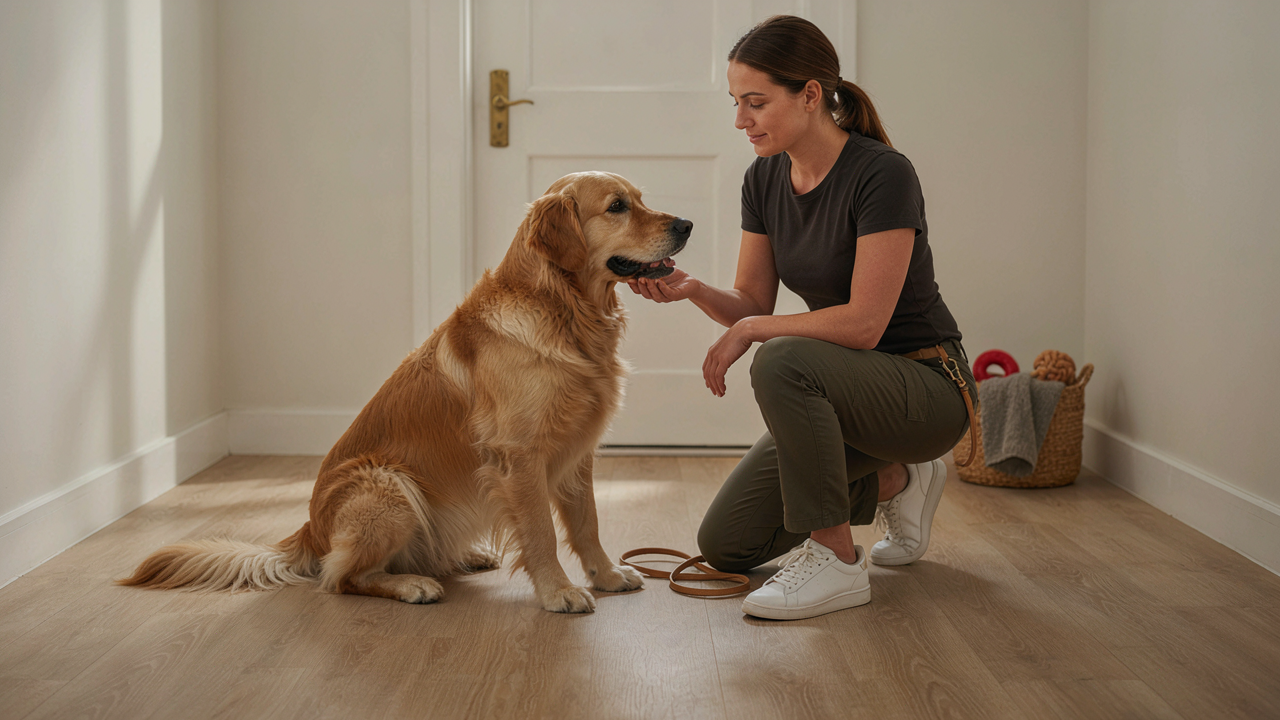
Dog jumping prevention is not simply about telling a dog “off” every time its front paws leave the floor. Jumping is often driven by excitement, attention-seeking, anticipation, or a lack of impulse control. If the behavior consistently produces attention, petting, play, or access to people, the dog may learn that jumping works.
The goal is to teach your dog what to do instead. Calm greetings, reliable obedience commands, consistent boundaries, and controlled practice can help replace jumping with polite behavior. Rob’s Dog Training takes a practical approach to helping dogs develop reliable obedience and better behavior in everyday situations.
For owners, this means looking beyond the unwanted behavior and teaching a clear alternative that the dog can successfully repeat.
Dogs naturally interact with the world through movement, scent, body language, and physical contact. When a person arrives home, approaches during a walk, or bends down to greet a dog, excitement can quickly take over.
Several factors can contribute to jumping:
This is why simply correcting jumping without teaching another response may not produce dependable results.
One of the most useful principles in dog training is to make the desired behavior clear. Instead of focusing exclusively on what the dog should stop doing, teach the dog what should happen during a greeting.
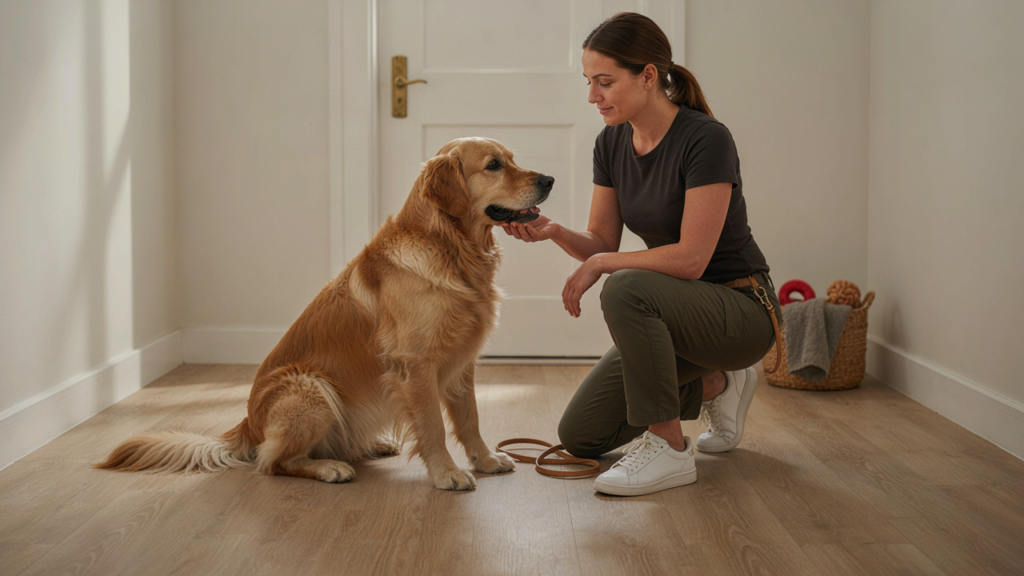
A sit is one practical option. When someone approaches, the dog learns that keeping all four paws on the floor and remaining composed is what earns attention.
The sequence becomes straightforward:
Over time, the dog can begin to understand that calm behavior—not frantic movement—is the reliable path to interaction.
Dog jumping prevention becomes easier when a dog develops stronger impulse control. This does not mean expecting perfect self-control immediately. It means gradually teaching the dog to pause, listen, and make a better choice despite excitement.
Start with situations where your dog can succeed. Ask for a simple behavior such as sit or place before meals, before going outside, or before receiving a favorite toy.
Then gradually introduce more challenging situations.
For example, you might practice:
These everyday moments create opportunities for meaningful training without requiring a formal session every time.
The front door is one of the most common places for jumping to happen. The arrival of a friend, delivery person, or family member can trigger an immediate burst of excitement.
Instead of allowing your dog to rehearse the entire greeting routine, establish structure before the door opens.
Begin with a simple expectation such as sitting or staying in a designated area. If the dog becomes too excited, reduce the intensity and try again. The visitor should only interact when the dog is calm enough to follow the expected behavior.
Consistency matters more than speed.
If one family member allows jumping because it seems cute while another person immediately stops the interaction, the dog may struggle to understand the rule. Everyone involved should follow the same greeting routine.
Owners often reinforce jumping without realizing it.
Imagine coming home after work. Your dog jumps, you laugh, say its name, push it down, and begin petting it once it lands. From a human perspective, you corrected the problem. From the dog’s perspective, jumping still produced an exciting interaction.
That is why attention itself can become part of the reinforcement cycle.
When practical and safe, make calm behavior the gateway to attention. Keep greetings low-key, avoid escalating excitement, and provide attention once the dog has settled into the expected behavior.
The objective is not to ignore your dog indefinitely. It is to make the timing of attention meaningful.
A dog that behaves perfectly in a quiet living room may still jump when surrounded by people, other dogs, noise, or movement.
That is normal.
Reliable behavior needs to be practiced in progressively more challenging environments. Rob’s Dogs emphasizes real-world obedience practice because dogs need to learn how to respond around distractions, not only during controlled exercises. Its private lessons are designed around hands-on training with owners, while its programs also address specific behavior concerns and everyday obedience.
Start with manageable distractions and increase difficulty gradually.
For example:
Level 1: Practice calm greetings with a familiar family member.
Level 2: Practice with a friend your dog knows.
Level 3: Practice with someone entering the home.
Level 4: Practice around more stimulating public environments.
If your dog becomes too excited to respond, the situation may be too difficult. Reduce the distraction and rebuild success before progressing again.
Clear communication is essential for dog jumping prevention. Your dog should know what behavior you expect and what happens when it follows through.
Commands such as sit, stay, place, and come can become useful tools for managing greetings and building overall obedience. Rob’s Dogs incorporates these practical obedience skills into its training programs, along with focus, leash manners, recall, and behavior work.
However, commands work best when they are reinforced consistently.
Avoid repeating a command five or six times while the dog ignores it. Instead, create conditions where the dog can respond successfully, provide clear guidance, and gradually increase distractions as reliability improves.
Jumping becomes particularly important when children are involved. A large or energetic dog can accidentally knock over a child even when the dog is friendly.
Children may also behave unpredictably from a dog’s perspective. Running, squealing, waving hands, or sudden movements can increase excitement.
Supervision is essential. Teach the dog to remain calm before interacting with children, and make sure children understand how to interact appropriately with the dog.
If your dog cannot reliably remain calm, create distance and use management strategies while training continues. Safety should always come before testing a behavior in a difficult situation.
Some jumping habits are easy to address with consistent home practice. Others occur alongside barking, leash pulling, reactivity, poor recall, or significant overexcitement.
When multiple behaviors overlap, professional guidance can help identify the underlying training needs and create a structured plan.
Rob’s Dogs offers both private lessons and Board & Train programs. Its private lessons provide one-on-one guidance for owners who want to participate directly, while Board & Train provides immersive training followed by instruction designed to help owners maintain progress at home.
A professional assessment can also help determine whether the dog’s jumping is primarily an obedience issue, an excitement-management problem, or part of a broader behavioral challenge.
Dog jumping prevention works best when it becomes part of the dog’s normal routine rather than an occasional training exercise.
Practice calm behavior before:
These small repetitions can teach your dog that patience and responsiveness are useful in many situations.
The goal is not simply to stop your dog from putting its paws on people. The bigger goal is to develop a dog that can manage excitement, listen to direction, and interact politely.
Dog jumping prevention is ultimately about creating a predictable pattern. Dogs learn from what repeatedly happens around them, so owners should make calm behavior easier to understand and more rewarding than jumping.
Set clear boundaries. Teach an alternative behavior. Practice around distractions. Keep expectations consistent among everyone in the household.
When jumping continues despite consistent training, professional help can provide a clearer path forward. Rob’s Dogs provides customized training through private lessons and immersive Board & Train programs for owners who want practical obedience and better behavior in everyday situations.
Visit Rob’s Dogs to learn more about its training options and take the next step toward calmer, more reliable behavior.